

Senior Citizens
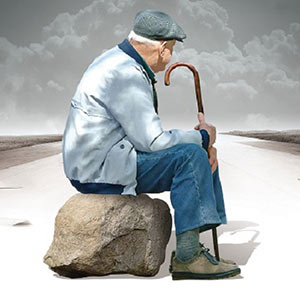
Aging population in the spotlight
By Fatemeh Shokri & Atefeh Rezvan-Nia
World population is rapidly aging. Between 2000 and 2050, the proportion of the world's population aged over 60 will double from 11 percent to 22 percent. The exact number of people aged 60 years and over is expected to increase from 605 million to 2 billion during the same period.
Population aging is a phenomenon that occurs when the median age of a country or region rises due to growing life expectancy and declining birthrates.
However, an aging population could have social and economic impacts.
Many countries, for instance, have been forced to increase immigration to compensate for the shortage of young workforce. It has led to numerous problems in light of cultural differences.
On the other hand, the number of senior citizens who have to live alone is on the rise worldwide in view of declining birthrate.
Government is duty-bound to improve the livelihood of such people by providing them with free healthcare services.
With 30 million youths — out of a total population of 78 million — Iran ranks among the world’s youngest countries.
However, the population of old people will exceed the number of youths in the coming years.
The elderly will constitute 12 percent of the country’s total population in the next 11 years, which has been perceived as a threat.
To tackle the challenges of an ageing population, Iran has formulated the strategic national document for the welfare of older people.
The document will be handed over to the cabinet for implementation in near future.
Farid Barati, the head of State Welfare Organization's Secretariat of National Council on Older People explained the document in an interview with Iran Daily.
Excerpts of the interview follow:
IRAN DAILY: Why are demographers constantly warning about Iran’s aging population?
FARID BARATI: The latest national census that was conducted in 2011 put the total population of the elderly at 6,500,000. Experts estimate that there will be 6,500,000 senior citizens in Iran by 2016.
According to global statements, a country is recognized as aging if senior citizens aged over 65 constitute 12 percent of its total population.
Currently, the elderly make up 8.2 percent of the country’s total population, with women accounting for 51 percent of the total figure.
Above-60 citizens will constitute 12 percent of the total population in 11 years. An aging population could present challenges to the country, leading to a shortage of workforce on one hand and an increase in healthcare expenses on the other hand.
How old is considered as old age in Iran?
People above 65 years of age are considered as senior citizens, according to the State Statistical Center of Iran.
However, retirement age is 60 in Iran.
Which factors lead to population aging in Iran?
Decline in birthrate and increase in life expectancy are two main factors contributing to the increase in the population of elderly in Iran.
Rising number of unmarried youths has been always blamed for increasing the population of the elderly, as it has been associated with the decline in fertility rate.
However, increase in life expectancy plays a more important role in this respect.
Iranians are living longer thanks to advances in the medical field that has improved the diagnosis of diseases and found treatment for infectious ailments. In the past, large number of people died of communicable diseases as a result of poor hygiene. Rising public awareness and observance of personal hygiene have increased the number of older people across the country.
Which provinces of Iran have the highest and lowest rates of the elderly?
Seniors above the age of 65 account for 11 percent of the population of Gilan province, which has been identified as the province with the highest number of old people. It is followed by the provinces of Mazandaran, Markazi, Isfahan and Tehran.
Old people on average make up for 9 percent of the total population of the aforesaid provinces.
Sistan-Baluchetsan, in the southeast of the country, is the youngest province with 4.5 percent of its total population being over 65. It is followed by Hormuzgan and South Khorasan provinces.
Sistan-Baluchestan is also home to the largest population of elderly people supported by charity organizations such as Imam Khomeini Relief Committee and Sate Welfare Organization.
What percentage of the elderly is in critical condition?
Of the total population of the elderly, which stands at 6,500,000, about 21,000 are supported by charity organizations.
Majority of poor elderly people are unknown persons suffering from Alzheimer’s and dementia or those who have no relatives.
Please explain about national document which has been prepared to improve the living conditions of older people.
State Welfare Organization established National Council on Older People 13 years ago to reduce the negative impacts of aging.
The council has prepared a national document recently, which included the solution to all problems that might face Iran's aging population such as healthcare issues and financial problems.
The document has undergone revisions by two experts from the United Nations Population Fund. The document has specified the duty of all organizations with regard to aging population to prevent a crisis.
It should be noted that the majority of Iran's elderly population will be well-educated individuals in the coming years with different demands compared to the current population of old people.
More seniors to live in nursing homes
The population of seniors without children or those having only one child is expected to grow in the near future, said Mohammad Reza Pour-Yousef, the deputy head of State Welfare Organization.
He blamed low birthrate among newlyweds and middle-aged couples as the reason behind the phenomenon.
"Families were bigger in the past and children were responsible for supporting older people. But with the decline in the number of children, older people have no way but to receive care in nursing homes," he said.
Pour-Yousef noted that the rising number of old people being admitted in nursing home will lead to other social problems.
"The elderly would be happier and healthier in their own homes, as being far away from children and grandchildren could cause depression and other diseases," he said, stressing that the organization is making efforts to provide the elderly with in-home care.
Pour-Yousef said every elderly has to pay a minimum of $233 per month for nursing services, which is too expensive for many.
"A significant number of elderly receive allowances to pay the cost of car services," he said.
Earlier, Ali Rabeie, the minister of cooperatives, labor and social welfare, called for changes in society's structures to make it ready for the rising number of old people.
"More than six million old people are currently living in Iran and statistics predicted that old people would comprise 30 percent of the country's population in the near future," he said.
Rabeie added that since 30 percent of the country's elderly are currently supported by charity organizations, including Imam Khomeini Relief Committee and State Welfare Organization, it is predicted that old people would face financial hardships in the future.
Rabeie also said in future, for every 100 old women, there would be 70 old men.
"The number of old women living alone is expected to rise," he warned, adding that because of rising urbanization and changing lifestyle, more adjustments are needed to secure their livelihood," he said.
Deputy Health Minister Ali Akbar Sayyari said 27 percent of the elderly are unemployed, of whom 17 percent lack any financial support.
He added that 18 percent of the elderly have health problems.
"The Health Ministry has prepared the Document of Elderly Health to meet the demands of aging population," he said.
Sayyari urged youths to have healthy eating habits to have healthy aging.
"Currently, five percent of people between the ages of 15-65 are cigarette smokers, 47 million pursue an unhealthy diet and 18 million have poor physical activities," he said, adding that such a lifestyle indicates an unhealthy aging, which could impose heavy burden on families.
Sayyari pointed to mouth and teeth diseases and skeletal and muscular disorders as the main health problems facing the elderly in Iran.
“Nine million people have high blood pressure, but are unaware of their condition,” he said.
Demographers have shown that Iran's elderly population will grow by 96 percent and old people will constitute 10 million of the country's population by the next 12 years.
About 7.5 million above 65 years will live in cities and the rest in rural areas.
Demographers believe Iran will have a nation with a majority of elderly people in the next 50 years.
Elderly in Iran suffer as economy falters
Being elderly in Iran is by no means simple; the society suffers from a shortage of means to accommodate senior citizens. Those who are wealthy, or even moderately well-off, are not forced to face many of the obstacles the poor and middle class must.
In the past decade — particularly over the last five years — senior citizens have been benefiting from some public transportation and limited recreational discounts, but the grave issue is that a lot of what Iranian senior citizens lack either does not exist at all in the country, or is offered at a high price, regardless of age.
For decades, the favorite hangouts for the elderly — and particularly for elderly men — were their local parks. They would walk to and from the park, and many would spend hours there during reasonable weather conditions. Nowadays, the number of parks and green spaces —as they are called in Iran — is limited due to massive construction projects (commercial and residential), especially in big cities. On the other hand, ever-increasing pollution in big cities results in hazardous conditions for most seniors. Alerts are issued frequently, particularly in the colder seasons, recommending that older people stay indoors.
Mohammad, a 68-year-old resident of Tehran, tells Al-Monitor that both highly polluted air and large crowds discourage him from frequenting the park as much as he used to. He talks about another incentive of hanging out at the park, which was playing chess with his friends. He says the chess table was pretty damaged and old, and in lieu of repair or replacement, it was simply removed.
Government-retired seniors generally face financial challenges. Although their pensions have been boosted to help them cope with colossal inflation, it is still far from being enough of an increase.
Official statistics issued by the Iranian government demonstrate changes in the price of most basic food items almost every month. This causes many critics to draw the conclusion that pensions and the customary new year’s bonuses given to retired citizens are far from enough.
Many older Iranians whose children live abroad long to see their sons and daughters and grandchildren, but are forced to veto the idea. The low value of the rial, long flights and layovers — specially for people headed to the United States or Canada — and the difficulty of obtaining a visitor’s visa are among the elements which make it extremely tough to travel.
Touraj, a 78-year-old retired engineer who lives in Yazd, tells Al-Monitor that he and his wife were forced to forfeit their US green cards after having yearned for them so badly for so long. To maintain a green card as a nonresident, green card holders must travel to the United States every six months. Touraj, whose three children all live in the United States, says, “We simply could not afford to travel to the United States twice every year. We struggled for a few years and then just had to give up. We miss our kids and grandkids terribly, but we had no choice.”
Saeed Mortazavi, the infamous former judge who was appointed head of the Social Welfare Society during Mahmoud Ahmadinejad’s presidency, proposed a 25% increase in pensions for retired federal employees.
This increase would still not beat inflation, which has been officially reported at 31% this year. The amount that was eventually added to the retired employees’ pensions, however, was only 18%.
Some Iranian authorities have time and again said that despite the recent implementation of an insurance plan called “The Golden Insurance Plan” (Bimeh-ye-Talaee) for some senior citizens, many elderly live without the health insurance benefits their peers enjoy in developed countries.
In a recent interview with ILNA, Mohammad Salimi, a spokesman for the Retirees Union of Iran’s Social Welfare Society, said, “Retired employees of the government have not paid 30 years of monthly dues only to fall behind on their day-to-day expenses in old age. The amount of annual increase in pensions is simply not compatible with the upward slope of prices.”
Badri, a 77-year-old retired teacher who resides in Tabriz, tells Al-Monitor that the Golden Insurance Plan provides good coverage for hospital stays, but regular doctor’s visits — which obviously occur much more often than hospital stays —are generally either not covered, or covered only partially.
Most Iranians honor the tradition of paying respect to their elders by visiting them, particularly on special occasions. For the Persian new year, elders give gifts to younger people, especially their children and grandchildren. A shortage of money and the last-minute payment of new year bonuses by the government create grave obstacles for braving traffic, crowds and pollution to buy goods and gifts in time for the arrival of the new year.
Many Iranian seniors do not receive the respect they deserve after a lifetime of paying their dues. This “disrespect” demonstrates itself in monetary means and many other concrete aspects of life. Insufficient public transportation, roadblocks including a lack of wheelchair ramps, polluted air in big cities and the recent sky-high cost of medication are just a few of them.
Maryam, a 55-year-old homemaker from Mashhad whose parents are elderly and retired, tells Al-Monitor it breaks her heart to see her parents struggling to survive. She says, “My father worked for this country, spent the best 35 years of his life working for the government. My parents loved to entertain and have relatives and friends over. But over the past several years, with their deteriorating health and medical expenses, hosting has become a nightmare for them. It’s really sad to see them so weak and fragile, but to watch as they suffer in a way they never did is truly tragic.”
Found in: IRANIAN ECONOMY, IRAN SANCTIONS, IRAN, INFLATION
.jpg )


